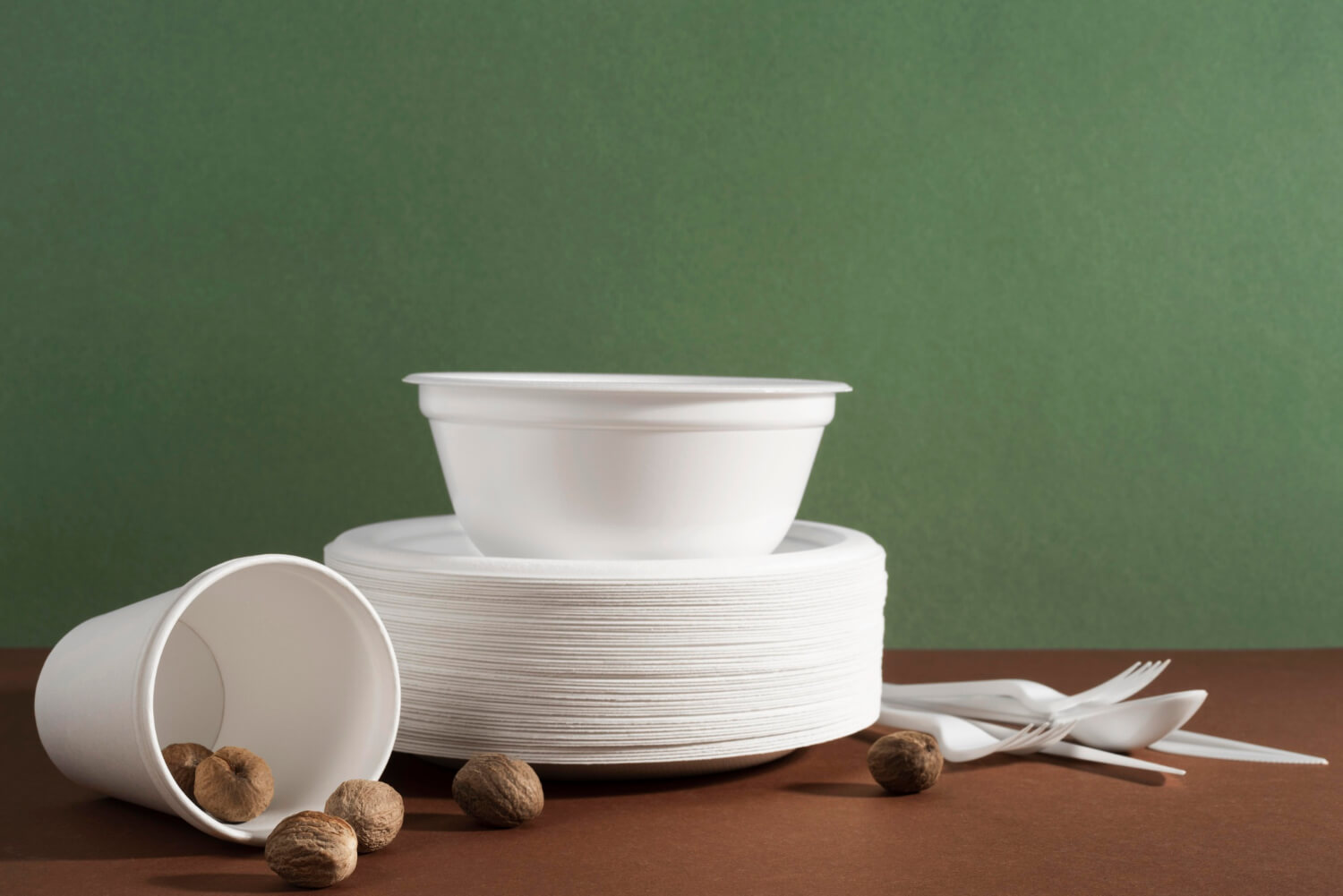
What Is Bagasse?
Bagasse is the fibrous residue left after extracting juice from sugarcane. For decades, it was considered agricultural waste and often burned, contributing to pollution. Today, thanks to advances in sustainable manufacturing, bagasse has become one of the most promising materials in eco-friendly packaging.
Why Bagasse Matters
With global concern over single-use plastic pollution, businesses and consumers are seeking alternatives that are renewable, biodegradable, and food-safe. Bagasse checks all these boxes.
Key benefits include:
1. Eco-Friendly & Biodegradable
Bagasse decomposes naturally within 30–90 days under composting conditions. Unlike plastic, which lingers for centuries, bagasse returns to the earth without leaving harmful residues.
2. Strong & Durable
Despite being plant-based, bagasse is surprisingly sturdy. It's ideal for manufacturing food containers, plates, bowls, and takeaway packaging. Its durability makes it a practical alternative to polystyrene foam.
3. Heat & Moisture Resistant
Bagasse packaging can withstand hot foods, liquids, and even microwave reheating. This makes it especially popular in restaurants, cafes, catering services, and food delivery operations.
4. Made From Renewable Resources
Sugarcane grows quickly and abundantly. Using bagasse for packaging supports a circular economy by turning agricultural waste into valuable products.
How Bagasse Packaging Supports Sustainability Goals
Businesses adopting bagasse packaging are reducing their carbon footprint, meeting eco-regulatory requirements, and aligning with consumer demand for greener choices. As environmental awareness continues to rise, bagasse offers a practical step toward a zero-waste future.
Final Thoughts
Bagasse is more than a trend—it's a key component in the transition to sustainable packaging. Whether you're a business owner looking to reduce plastic use or a consumer choosing eco-friendly products, bagasse offers an efficient and responsible alternative.